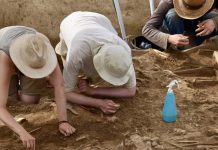
Çakmaktepe, a fascinating archaeological site in Southeast Turkey near Şanlıurfa, is throwing new light on the early stages of human settlements and social organisation. The site, which was discovered in 2021, is part of the Şanlıurfa Neolithic Research Project – Taş Tepeler, a wide-ranging programme of research into the neolithic history of the region.
Location and Context
Çakmaktepe lies at an altitude of 670 metres above sea level on the Eocene limestone plateau of the Fatik (Cudi) Mountains, about 20 km southwest of the centre of Şanlıurfa. The settlement covers an area of about 150 metres in diameter, although some traces of buildings can be found outside this core area. It is one of a cluster of Pre-Pottery Neolithic settlements, such as Sayburç and Karahantepe, which lie only a few kilometers apart. This area played a crucial role in the transition from nomadic hunter-gathering to a more sedentary existence.

History of the research programme
The discovery of Çakmaktepe was the result of satellite images and fieldwork by the Şanlıurfa Archaeological Survey (ŞAYA) Project in 2021. Since then the research, carried out by teams from Çukurova University, the Şanlıurfa Archaeological Museum and the University of Tsukuba (Japan), has led to numerous ground-breaking finds which emphasise the cultural, social and technological transformation in the early history of the settlements.

Archaeological finds and structures
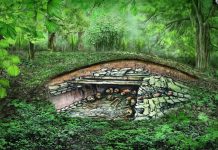
The houses in Çakmaktepe were built by hacking out the rocky ground surface and laying floors measuring 3-5 metres in diameter. In some steep areas the first attempts at terrazzo floors have been identified, marking a remarkable step in architectonic innovation. Inside the buildings cone-shaped holes have been carved out of the rocks. These were probably used as mortars, representing a transition in the method of food production.
One of the most intriguing finds is a circular communal building with a diameter of approximately 16 metres. The building had been carefully dug out and then filled, suggesting a ritual function. Other buildings contain remains of burnt animal skulls such as wild oxen and sheep, which were deliberately placed, emphasising the ceremonial significance of the structures.

Daily life and technology
Archaeological finds point to a society which was dependent on hunting and gathering wild plants. Artifacts like millstones and stone implements provide an insight into the diet and daily practices. One artifact bore an image of an antelope hunt which proves the existence of organised hunting for food and social activities.
The stone tools, including El-Khiam points, date the settlement to 10,000-9,500 BC, which makes Çakmaktepe one of the oldest sedentary hunter-gatherer communities in Anatolia.

Doelen van het Onderzoek
The Çakmaktepe project heeft tot doel om:
1. Understanding the early stages of human settlements in comparison with other sites such as Göbeklitepe and Karahantepe.
2. Gaining insight into the density, divisions and social structure of the settlement.
3. Clarifying the role of communal buildings in social cohesion and their ritual functions.
4. Studying the fauna and flora to investigate the transition to domestication.
Conclusion
Çakmaktepe offers a unique insight into the cultural and social transformations of the Pre-Pottery Neolithic Period. With its complex architecture, social organisation and ritual practices the site shows how early societies combined social contacts and innovation in their quest for a sedentary existence. That makes Çakmaktepe an essential link in our understanding of human history.


Translation Alun Harvey