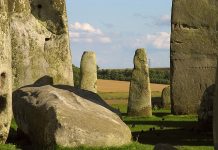
Trodlkirken is a Stone Age burial mound close to the village of Sønderholm, roughly 13 km southwest of Aalborg. It is well known as one of the finest of all the prehistoric monuments in Denmark. In 1983 it appeared on a Danish postage stamp.
Troldkirken was built about 5,000 to 6,000 years ago by people of the Funnel Beaker Culture. That is an umbrella name for a large number of related communities in Northern Europe during the Neolithicum or New Stone Age between 4,450 to 2,700 BC. The territory they inhabited stretched from southern Scandinavia in the north to the Danube in the south, and from the Netherlands in the west to the Boeg [a river in the Ukraine), White Russia and the eastern border of Poland in the east. The funnel-shaped beakers of this culture were used, among other things, as grave goods and buried with their dead.
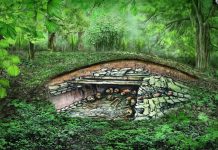
The relatively well-preserved long burial mound of Troldkirken consists of 47 side stones and one chamber with an enormous capstone placed on top of the mound above it. A long passage leads to this chamber. The whole monument is around 50 metres long and 12 metres wide. Since 1809 Troldkirken has been a protected area and was in fact one of the first prehistoric monuments to be given legal protection. The burial mound is open to the public.
The Danish name Troldkirken means Church of the Troll and refers to the legend of a troll who lived on the other side of the Limfjord. He was annoyed at the sound of the church bells in Sønderholm and threw an enormous stone across the fjord with the intention of destroying the church tower. He missed and the stone became instead the massive capstone of the tumulus. The stone is estimated to weigh around 7,000 kg.
There are many other hunebeds in the area around Troldkirken and the surrounding landscape is also breathtakingly beautiful.
Translation Alun Harvey