Shulgan-Tash Cave (also known as Kapova Cave) is located in the Southern Ural Mountains of Russia. The cave, which contains large halls, galleries, deep chambers and underground lakes on several levels, is known for its extensive Late Palaeolithic rock art.
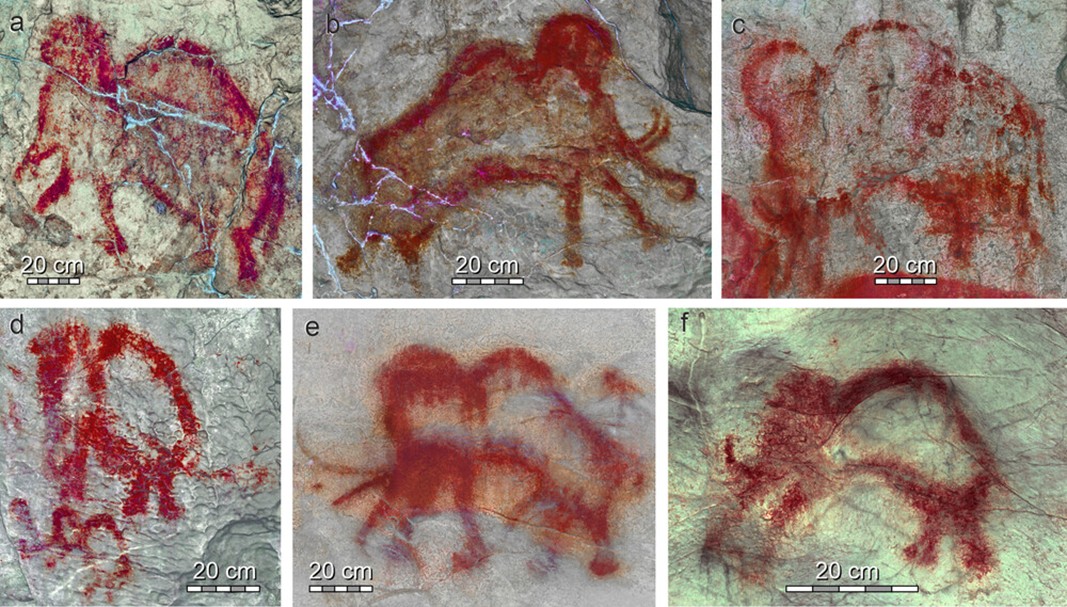
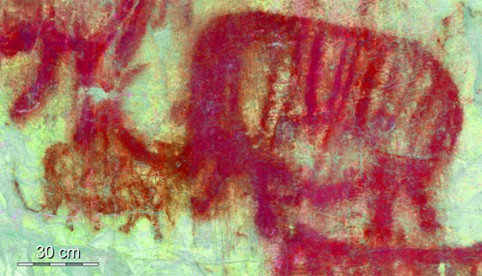
The collection consists of more than 190 paintings, dating from between 14,500 and 36,400 years ago, depicting steppe fauna such as mammoths, woolly rhinoceros, bison and horses. The images are made using red ochre, sometimes outlined in charcoal. Around 30–50 images are relatively well-preserved, including the only known prehistoric image of a Bactrian (two-humped) camel.
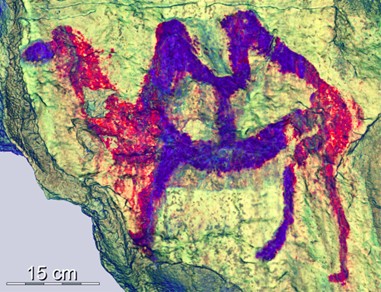
© Yu.M. Svoysky, E.V. Romanenko, S. Peshkov, SI SPC whc.unesco.org/en/documents/220752
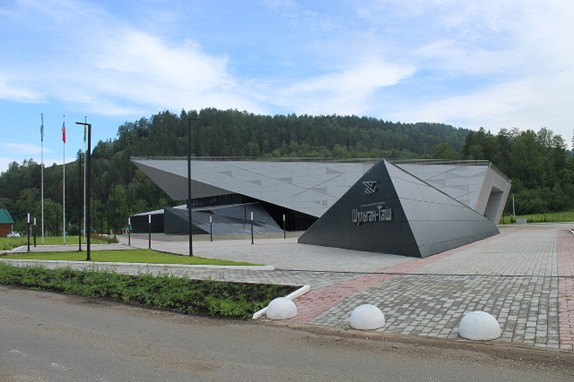
Near the cave is a new visitors’ centre, opened in 2022. Visiting the best-known images inside the cave system requires a certain amount of stamina as they are located on the second level more than 300 meters from the entrance. Reaching them involves climbing up from the first level on two steel ladders – one of them 16 meters long – through a hole in the roof and then following a sloped path to the upper level.
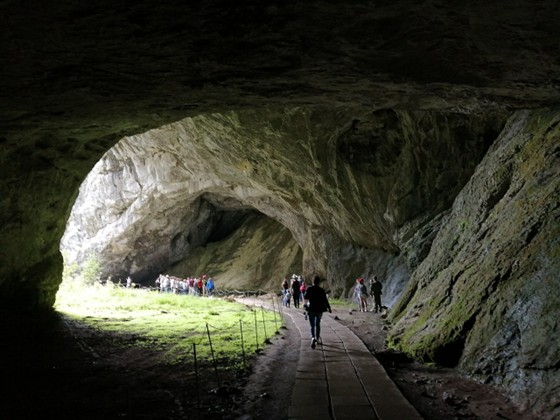
The entrance to the cave, known as the Portal, forms a huge arch 30 m (98 ft) high. A lake to the left of the entrance is the source of the Shul’gan River, which originally created the cave and now flows through it. The three-storey cave system is about 3 km (1.9 miles) long and reaches a depth of 165 m (541 ft).
A passageway from the Portal leads to a series of ground level halls – the Main Gallery, Stalagmite Hall, Dome Hall, the Hall of the Signs and the Hall of Chaos. Traces of prehistoric man can be found in the form of red paint and geometrical figures in the Middle Dome Hall and the neighbouring Hall of the Signs, while the Hall of Chaos is described as an underground museum. Displayed on its walls can be seen a coloured picture of horses, a geometric figure, a further group of geometric signs and a depiction of a human-like creature.
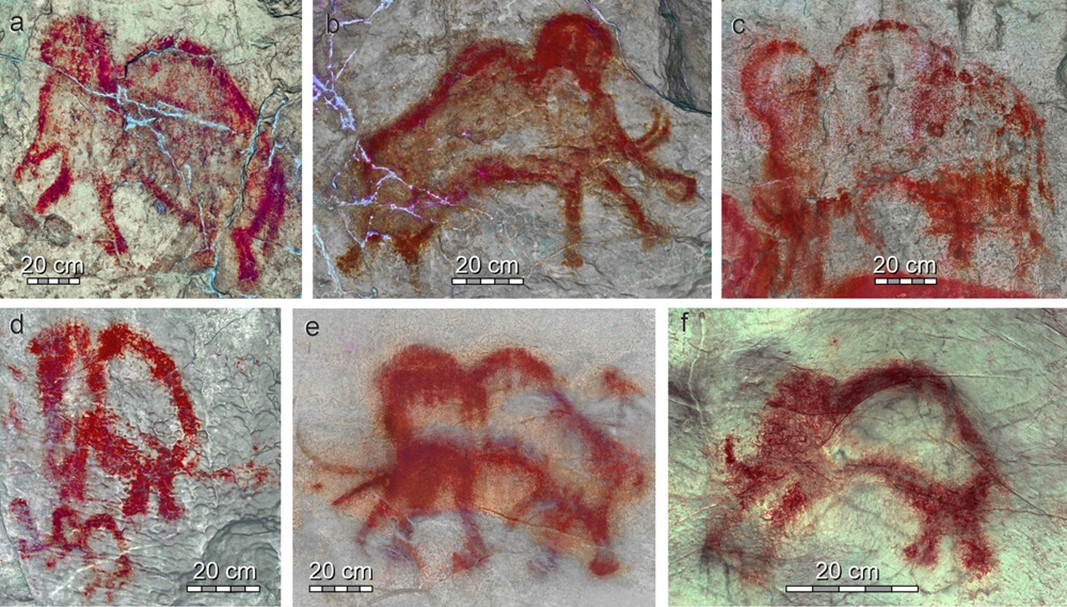
The upper chambers are reached by climbing a metal ladder into the First Gallery, from where a series of halls leads to the most famous area — the Hall of the Drawings. The upper level of this hall contains the oldest pictures, painted in the Late Palaeolithic Era, a time when Cro-Magons lived on the planet. The later images on the lower tier date from the end of the last Ice Age. These include a bison or a bull and mammoths with a calf, as well as a painted trapezoid shape with strange lines and signs inside the figure and unusual “ears” at the top. Similar geometrical signs appear repeatedly in the drawings of Shulgan-Tash Cave.
One striking feature of the images is that all the animals are shown walking from right to left! The one exception is a small mammoth standing or going in the opposite direction.
Beyond the Hall of the Drawings there are 14 other halls which are accessible to visitors – the Second Gallery, Acoustic Hall, Oval Hall, Hall Temple, Upper and Diamond Halls, Hall of Upper Lake (which contains a large lake), the Rainbow and the Crystal halls, the Hall of the Mountain King, the Gallery Hall, Hall of the Abyss, Transsyphon Hall and finally the Far Hall.
The first written information on Shulgan-Tash Cave appeared in January 1760 and the cave and river system have been explored on numerous occasions over the centuries by geologists, archaeologists and other scientists.
The rock paintings of Shulgan-Tash Cave are one of 26 new locations added to the UNESCO list of World Heritage Sites in 2025.